


Fahlo Animal Tracker
4.33.46K Reviews
App Specs
- Version
- 2.3.3
- Updated On
- License
- Free
- Downloads
- 1,000,000+
- Developer
- Fahlo
- Categories
- Entertainment
- Platform
- Android, iOS
Screenshots
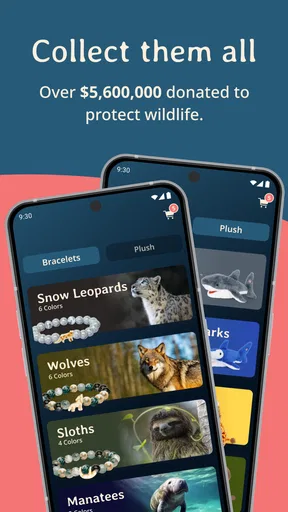
 Analysis by AppCompare
Fahlo Animal Tracker is the kind of entertainment app that makes a physical gift feel more connected to the real world. I used it as a companion to a Fahlo bracelet, and the appeal was immediate: instead of treating the bracelet as a simple accessory, I could use the app to follow an animal connected with it. That small change gives the purchase a story and a reason to return.
The app is free to download, and its main idea is easy to understand. Fahlo, the developer, combines animal tracking with a lightweight mobile experience aimed at people who enjoy wildlife, conservation themes, and meaningful gifts. It is not trying to replace a full wildlife documentary, a serious mapping tool, or a conventional social network. Its strength is the link between a tangible bracelet and an ongoing digital activity.
After spending time with it, my view is positive but measured. The first use has more emotional impact than technical depth, while the lasting value depends heavily on whether I remain interested in checking an animal’s progress. That distinction matters. If you want a quick, charming way to add context to a bracelet, this app works well. If you expect a constantly changing entertainment platform with deep interaction, it may feel limited once the novelty settles.
What the first week feels like
The first-week experience is built around discovery. I found the idea more engaging than simply opening an app and browsing unrelated wildlife clips because the bracelet gave the activity a personal starting point. There is a sense of continuity: the physical item sits on my wrist, while the phone provides the digital side of the experience.
That connection also makes Fahlo Animal Tracker especially suitable for children and families. The Everyone age rating makes it approachable, and the basic concept is simple enough to explain without a long tutorial. A parent can use the bracelet as a conversation starter, while a child can check in on the animal and ask questions about its movement or environment. The app does not need to be treated as a formal lesson to have educational value.
For me, the most useful early habit was opening the app at a natural moment rather than trying to force daily use. A quick check during a quiet evening worked better than treating it like a task. This is an important distinction because the experience is observational. I am not controlling an animal, completing missions, or competing with other users. The pleasure comes from following along.
That makes the app calming compared with many entertainment alternatives. A typical short-video feed tries to keep me scrolling through an endless stream of new material. Fahlo offers a narrower reason to return. I spend less time inside it, but the visit feels more connected to something I already own.
Worth Reading Before You Choose

EA SPORTS FC Mobile 26 Is a Bigger Football Game, but It Takes Time

Flipboard Shows What News Apps Must Do Beyond the Feed

Switching to Android Auto Means Rethinking Your Driving Routine

Google Calendar Makes a Crowded Week Easier to Manage

Ludo King Makes the Most of the Minutes Between Plans

Baby Panda World Brings Quick Play to Modern Phones, but Its Game Library Feels Busy
The first week is also when the bracelet-app relationship feels freshest. Showing the bracelet to a friend or family member and then opening the tracking experience creates a natural moment of sharing. It is more memorable than saying, “I downloaded another wildlife app,” because there is a physical object attached to the story.
Why the physical connection matters
The bracelet is not just decoration in this setup. It acts as a reminder to revisit the app, which is a clever solution to a common problem with entertainment downloads: many are forgotten after the first few openings. When I see the bracelet, I have a visual prompt to check the animal again.
That prompt can work particularly well as a gift. Someone who would not normally install a standalone nature app may still try Fahlo because the app completes the meaning of the bracelet. In that situation, the software is not competing for attention on its own; it is extending an object that already has emotional value.
There is a trade-off, though. The app’s usefulness is closely tied to having the relevant Fahlo bracelet. Without that physical connection, the reason to keep returning is weaker. I would not recommend downloading it expecting a broad catalog of entertainment in the style of a streaming service. Its appeal is specific, and that specificity is both its personality and its boundary.
A realistic everyday use
Imagine receiving a bracelet as a birthday gift. During the first evening, you install the free app, connect the experience to the bracelet, and look at the animal’s information together with the person who gave it to you. A week later, you check the app while having breakfast and notice that the animal’s journey gives you something new to talk about. Later, you show the map or tracking view to a child who is curious about where the animal is going.
That is where I think Fahlo works best: as a small recurring ritual rather than a long session. It can fit into a family conversation, a classroom-style discussion at home, or a quiet personal check-in. I would not plan an entire evening around it, but I can easily imagine opening it for a few minutes because the bracelet keeps the connection visible.
What remains useful after the novelty fades
The month-to-month question is harder. The initial surprise of tracking a real animal naturally decreases. Once I understand the basic flow, the app has to earn future openings through meaningful updates and the personal attachment created by the bracelet. That means its recurring value is less about variety and more about continuity.
I found that the best way to preserve interest was to treat the animal’s movement as a story unfolding slowly. Checking constantly can make the experience feel repetitive, because wildlife movement does not necessarily produce a dramatic event every time. Checking occasionally gives each return more context and makes gradual change easier to notice.
This is one of the app’s less obvious trade-offs. A user who wants instant rewards may find the pace unsatisfying, while someone who enjoys following a long-running story may appreciate the slower rhythm. Fahlo is closer to keeping up with a living subject than playing a level-based game. The app becomes more rewarding when I accept that not every visit needs to deliver a surprise.
Its category placement as an entertainment app makes sense, but I would describe the experience as reflective entertainment rather than active entertainment. There is no need to master complicated controls. The value comes from attention, curiosity, and the feeling that the bracelet represents more than a purchase.
The app can also serve different purposes for different users. For a wildlife enthusiast, it adds a personal thread to an existing interest. For a gift recipient, it gives the bracelet a continuing function. For a parent, it creates an accessible way to discuss animals and habitats. For a casual user, it may simply be a pleasant occasional check-in.
On the other hand, people who prefer broad content libraries may be better served by a nature video service, a wildlife news source, or a general educational app. Those alternatives offer more subjects and more frequent content changes. Fahlo’s advantage is not breadth. It is the focused relationship between one bracelet and one tracking experience.
How I would build a lasting habit
I would avoid notifications or repeated checking unless they genuinely help me remember the app. The stronger routine is to attach it to something already happening, such as looking at the bracelet before a weekly planning session or checking it during a relaxed weekend breakfast. This keeps the app from becoming another obligation.
I would also use the tracking information as a prompt for questions rather than treating it as the entire experience. Where is the animal moving? What might that route mean? Why does a gradual update feel different from a sudden one? Even when the app itself remains simple, those questions can make the activity more engaging for a family.
A further tip is to share the experience selectively. Sending every update to friends could quickly become tiring, but showing a meaningful change to the person who gave the bracelet can reinforce the emotional value of the gift. The app works better as a conversation starter than as a feed that demands constant broadcasting.
There is also a practical reason to keep expectations realistic. The app should complement interest in wildlife, not replace deeper learning. If I want detailed species research, conservation reporting, or a broad collection of live nature content, I need another source alongside it. Fahlo’s role is narrower and more personal.
Maintenance, friction, and reasons interest can weaken
The maintenance burden is relatively light because this is not an app that asks me to manage a complicated profile, build a collection, or maintain a competitive ranking. I can use it casually and return when I feel curious. That simplicity is welcome, especially for families who do not want another demanding game or social platform.
Still, light maintenance is not the same as no maintenance. The app needs a place in my memory, and the bracelet is the main reminder. If I stop wearing it, put it in a drawer, or lose interest in the animal’s journey, the app becomes easier to forget. Its habit loop is physical and emotional rather than driven by a large amount of fresh content.
I also pay attention to the fact that in-app purchases are listed at $2.99 per item. The free entry point makes it easy to try, but anyone who wants to explore paid items should decide in advance what value they expect from each purchase. I would not buy automatically just because the app is connected to a charitable-feeling product. A purchase should add something I genuinely want, not simply extend the novelty.
That pricing detail is especially relevant for parents. If a child becomes enthusiastic, I would explain which parts are available without payment and agree on a rule before making any purchase. The app is easier to enjoy when the spending boundary is clear from the beginning.
Another possible source of fatigue is repetition. The experience is centered on tracking, so users who need frequent new challenges may eventually feel that they have seen the main idea. The app does not become a conventional game just because it has an animal journey attached to it. I would skip it if I knew I would lose interest in an observational experience after the first few checks.
Some people may also feel uncomfortable with the emotional framing of tracking a real animal. For me, the connection is appealing, but it can create expectations that every update will be dramatic or personally meaningful. The healthier approach is to see the app as a window into a gradual journey, not as a guaranteed stream of exciting events.
Who should use it and who should pass
I would recommend Fahlo Animal Tracker to someone who already owns or is considering a Fahlo bracelet, enjoys wildlife, or wants a gift with a continuing element. It is also a good fit for families looking for a gentle, screen-based activity that can lead into conversations about animals without demanding long sessions.
I would be more cautious recommending it to someone who wants a standalone entertainment app with lots of content, strong personalization, or constant interaction. A nature documentary app may be better for visual storytelling, while a dedicated educational platform may be better for structured learning. A mapping service may be more suitable for users who want detailed geographic tools rather than a simple personal connection.
The app’s broad audience is reflected in its reception: it has a 4.3 average from around 25 thousand ratings, with more than a million installs. Those figures suggest that the concept has reached well beyond a tiny niche, but they do not change the central question each user should ask: will I enjoy returning to one animal’s journey after the first excitement passes?
Fahlo Animal Tracker is currently on version 2.3.3, and the product has been available since November 23, 2021. I mention that context because the app feels like an established companion product rather than a brand-new experiment. Its identity is clear, and the experience is focused, but that focus also means it should not be judged by the standards of a much larger entertainment platform.
My long-term verdict
After the first-week appeal fades, I think the app earns a place on the phone for the right user, not for everyone. Its lasting strength is the way it turns a bracelet into an ongoing reminder of wildlife and a shared story. That is more distinctive than a generic animal facts app, and it gives the experience emotional weight without requiring a large time commitment.
My strongest recommendation is to use it periodically and intentionally. Let the bracelet remind you to return, avoid expecting every visit to feel new, and use the animal’s journey to start conversations or learn more elsewhere. That approach respects the app’s slower rhythm and prevents it from becoming another feed that I open automatically and abandon just as quickly.
The limitations are real. The experience may feel narrow without the physical bracelet, the tracking format may not satisfy users who want constant action, and paid items require a little spending discipline. The app also depends on personal attachment, so its value can decline if the gift loses relevance or the user never develops an interest in following the animal.
Even with those caveats, I like what Fahlo has chosen not to do. It does not need to overwhelm me with menus, challenges, or endless clips. Its best moments come from a simple loop: wear the bracelet, remember the animal, check in, and share the story when it feels meaningful. That focused loop is the reason it can remain useful after the novelty fades.
For me, this is a thoughtful entertainment app rather than an all-purpose wildlife destination. I would install it with a Fahlo bracelet, recommend it as a gift companion, and keep it available for occasional check-ins. I would not promise that every user will form a lasting habit, but for anyone who values small, real-world connections more than constant digital stimulation, it has a genuine chance of staying relevant.
In short, Fahlo Animal Tracker succeeds when I treat it as a quiet companion to the bracelet, not as a game I must complete or a feed I must follow every day. The free download makes trying it easy, the Everyone rating keeps it accessible, and the app’s focused design gives it a clear purpose. Its long-term value comes from returning at a comfortable pace—and from deciding that a small connection is enough.
Pros
- Supports wildlife conservation through animal-tracking programs.
- Provides engaging educational facts about individual animals.
- Tracking updates make conservation feel personal and interactive.
- Suitable for families and younger users interested in wildlife.
- Animal stories can encourage ongoing support for conservation projects.
Cons
- Tracking updates may be infrequent depending on the animal and project.
- Some animals may travel outside areas with reliable location data.
- Requires an internet connection for maps and tracking updates.
- The experience depends on the availability of participating conservation projects.
- Purchases or subscriptions may be needed for certain tracking programs.
FAQs for Fahlo Animal Tracker
What is Fahlo Animal Tracker, and how does it work?
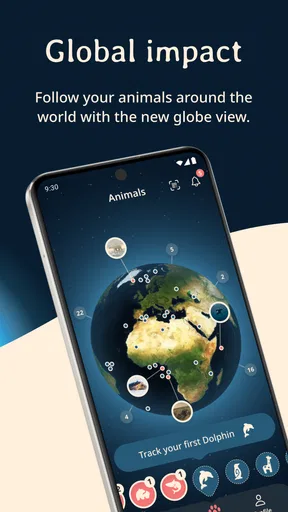
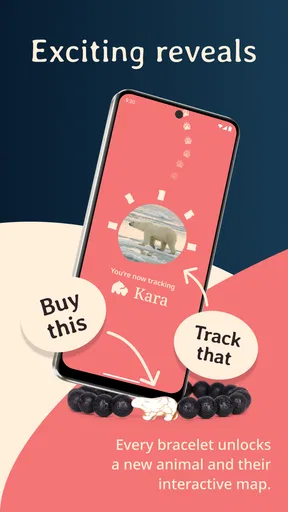
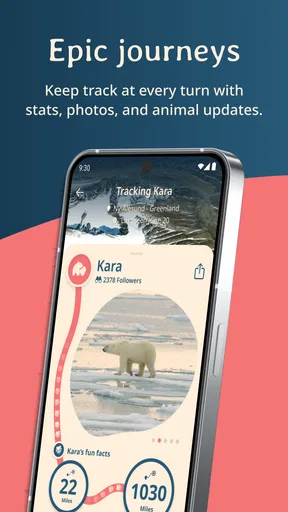
Fahlo Animal Tracker is an educational wildlife app connected to conservation-animal tracking experiences. After obtaining a Fahlo bracelet or related product, users can typically scan a code to follow a selected animal’s journey on an interactive map. The app presents information about the species, conservation efforts, and the animal’s movements, although tracking updates and available features may vary by animal and conservation partner.
Do I need to purchase a Fahlo bracelet to use the app?
The app may be downloadable without purchasing a bracelet, but the full tracking experience is generally designed to work with a unique code supplied with an eligible Fahlo product. Without that code, users may have limited access to individual-animal tracking features. Before downloading, check the current product details and redemption instructions, since requirements can change depending on the campaign, animal, or conservation program.
Is Fahlo Animal Tracker suitable for children and families?
Fahlo Animal Tracker is designed to make wildlife conservation more engaging for children, students, and families. Its maps and animal profiles can encourage curiosity about marine life and endangered species. Parents should still review the app’s privacy settings, account requirements, and external links, particularly for younger children. The educational value is strongest when adults discuss conservation topics alongside the tracking experience.
Does the app show an animal’s real-time location?
Users should not expect Fahlo Animal Tracker to provide a continuously updated, real-time GPS location. Animal movements are usually based on tracking data shared by conservation organizations, and updates may be delayed, intermittent, or affected by signal availability, battery limitations, and the animal’s environment. The map is best understood as an educational view of movement patterns rather than a live navigation tool.
Is Fahlo Animal Tracker free, and are there privacy or technical considerations?
Downloading the Fahlo Animal Tracker app may be free, but access to certain tracking experiences can depend on purchasing a participating Fahlo product. Availability, account features, and optional purchases should be checked in the relevant app store before installation. Users should also review permissions, privacy information, supported devices, and internet requirements, because map content and tracking updates may require a connection.


